

By Grace Chang
A city where tech meets daily rhythm
In San Francisco, AI isn’t just a topic at coffee shop conversations—it’s the hidden force gradually shaping how we do everyday things. From ordering groceries and commuting, to deciding what to wear and how we spend our time, artificial intelligence is becoming built-into the background of our routines. Here are some of the most tangible ways SF residents are already living with AI in 2026.
Smart tools at home and on hand
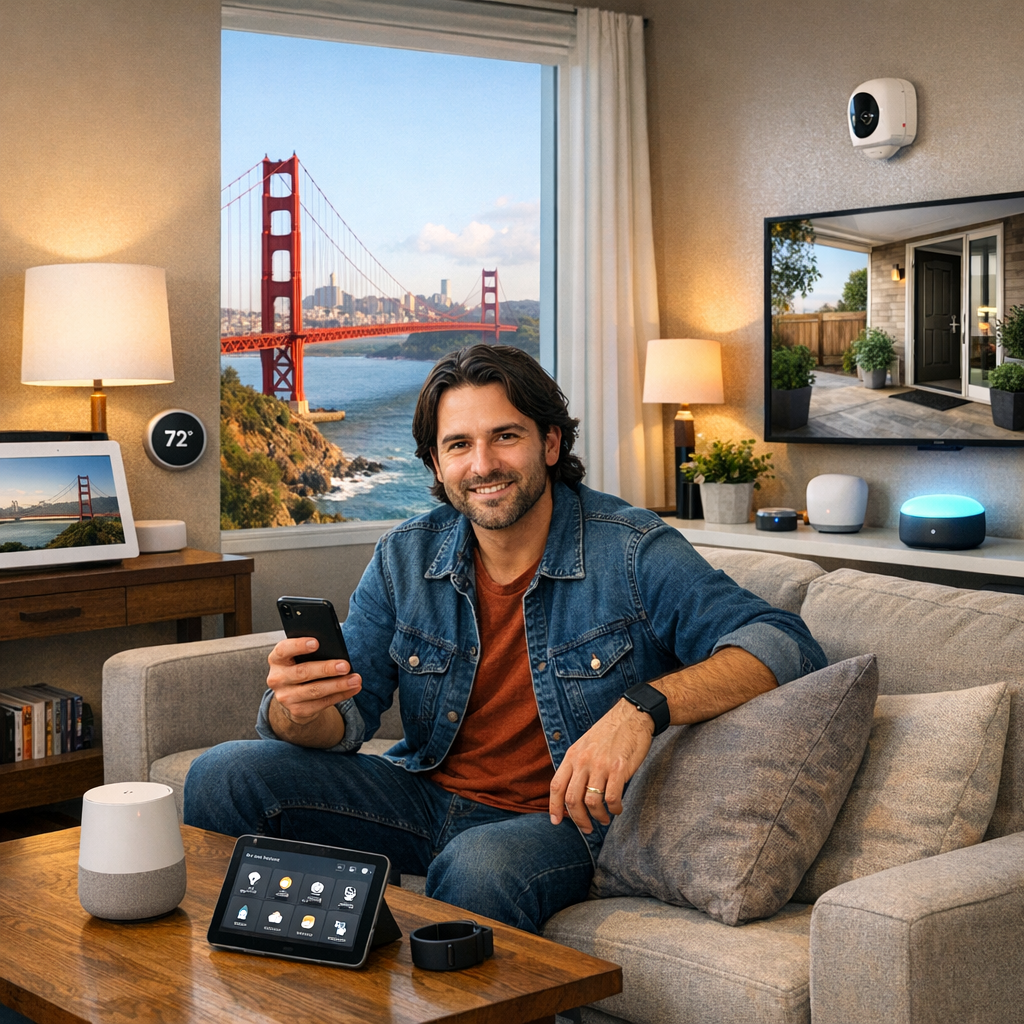
Connected devices are rapidly moving beyond novelty. Household gadgets—like robot vacuums, smart thermostats, and voice-enabled assistants—are everywhere. According to a recent survey, nearly all households have smartphones or smart TVs, while smaller but growing shares report using smart wellness or kitchen devices daily. These tools are streamlining chores, managing comfort, and saving energy—often without us thinking about the tech behind them. (Devices like learning thermostats predict when you’re home; the coffeemaker can begin brewing at a voice command.)
Work transformed in quiet but powerful ways
Larger city shifts anchor the change. Now, more job postings in SF require AI or machine-learning skills—more than double from just a year ago. Occupations like software development, management, and analytics are seeing the most exposure to AI. Meanwhile, roles involving manual labor or human care—fast food, cleaning, caregiving—show lower exposure. For individuals and startups that build workflows around these tools, productivity gains are real—but so are challenges like keeping up with rapid change and avoiding burnout.
Community service and local flavor
AI is even finding its way into SF’s nonprofit and neighborhood scenes. In the Tenderloin, for example, a nonprofit that makes meals for residents with medical conditions has partnered with a local food robotics company to automate part of its kitchen operations. These robotics act as volunteers when human help is short, allowing staff to reallocate energy and hours toward caring roles. And in retail, some storefronts are experimenting with AI-run help desks where you interact via voice or phone rather than signage. These touches may feel futuristic, but they’re becoming part of the normal retail environment.
The cost of being “AI-close”
Not everything that changes daily feels easier. Experts say that San Francisco’s AI boom has pushed office demand up significantly—and that developers and firms focused on AI are leasing more space. In turn, rents in some neighborhoods are rising faster than average. Also, many people find themselves second-guessing what they see online or worrying about security, data use, and how much autonomy we’re handing over to algorithms. It’s not just about convenience or novelty—it’s a balancing act between efficiency and privacy, speed and care.
Living thoughtfully with AI
To make sure AI improves our daily lives without diluting what makes San Francisco feel like home, residents can take a few steps:
- Learn where and how your data is used—small transparency helps restore trust.
- Support local policies that protect workers, renters, and small businesses from unintended AI-driven disruptions.
- Stay curious—try new tools, but also maintain what’s human in your routine.
As AI’s presence increases in kitchens, streets, stores, and workspaces, the most meaningful change might just be cultural: remembering with each innovation that our tech is here to serve community—not replace it.