

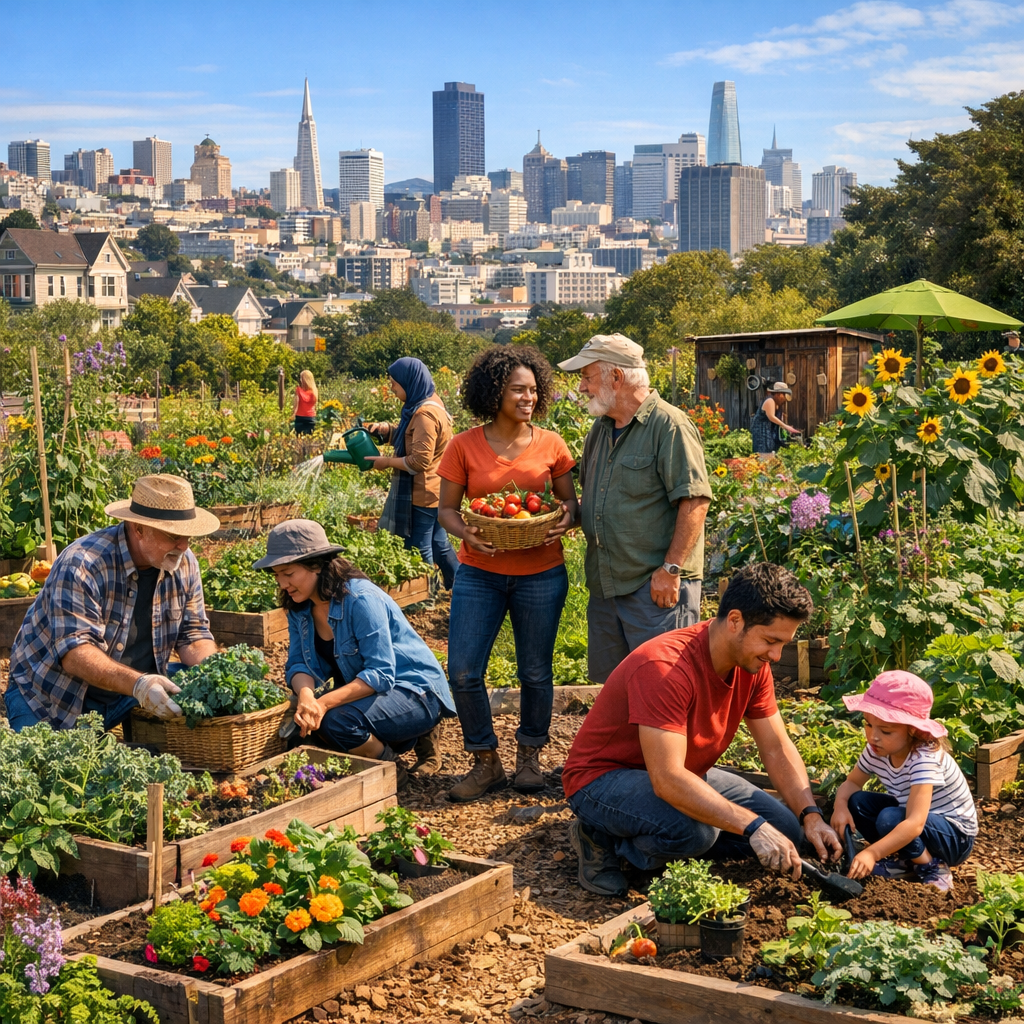
In the heart of San Francisco, amidst its bustling streets and towering buildings, lie verdant spaces that offer residents a chance to connect with nature and each other. Community gardens have become integral to the city’s landscape, providing not only fresh produce but also fostering a sense of community and environmental stewardship.
The Growth of Community Gardens
San Francisco’s commitment to green spaces is evident in its support for numerous community gardens. The San Francisco Recreation and Parks Department manages over 40 such gardens, each serving as a testament to the city’s dedication to urban agriculture and community engagement.
Notable Community Gardens
Potrero Hill Community Garden
Established in the early 1970s, the Potrero Hill Community Garden boasts 51 plots maintained by local residents. Its sunny, Mediterranean climate permits the cultivation of a diverse range of plants, including fruits, vegetables, and ornamentals. The garden also offers panoramic views of the Mission District and Twin Peaks, making it a cherished spot for both gardening and relaxation.
Tenderloin People’s Garden
In the heart of the Tenderloin district, the Tenderloin People’s Garden serves as a green oasis and community gathering space. Since October 2023, it has been stewarded entirely by volunteers dedicated to maintaining the garden as a vital community resource. Regular events, such as poetry readings and planting sessions, foster a strong sense of community among participants.
McLaren Park Community Garden
Funded by the 2008 and 2012 Clean and Safe Neighborhood Parks bonds, the renovated McLaren Community Garden includes communal planter beds, sheltered gathering spaces, and ornamental fencing. Designed to accommodate 41 raised garden plots, it offers residents a structured environment to engage in urban gardening.
Getting Involved
For those interested in joining a community garden, the process typically involves joining a waitlist due to high demand. Once a plot becomes available, new members undergo an orientation covering garden access, member agreements, and sustainable practices. This ensures that all participants are well-equipped to contribute positively to the garden community.
Beyond individual plots, some gardens, like the In Chan Kaajal Community Garden, offer communal gardening experiences. These gardens invite volunteers to participate in shared gardening activities, with harvests distributed among participants. Such communal efforts not only yield fresh produce but also strengthen community bonds.
The Impact on the Community
Community gardens in San Francisco do more than provide space for gardening; they serve as hubs for education, sustainability, and social interaction. They offer residents an opportunity to learn about horticulture, engage in physical activity, and contribute to local food security. Moreover, these gardens beautify neighborhoods, reduce urban heat, and provide habitats for local wildlife.
In a city as dynamic as San Francisco, community gardens stand as symbols of resilience and unity. They remind us of the importance of green spaces in urban settings and the power of community collaboration. Whether you’re a seasoned gardener or a curious newcomer, these gardens welcome all who wish to cultivate not just plants, but also connections and community spirit.