
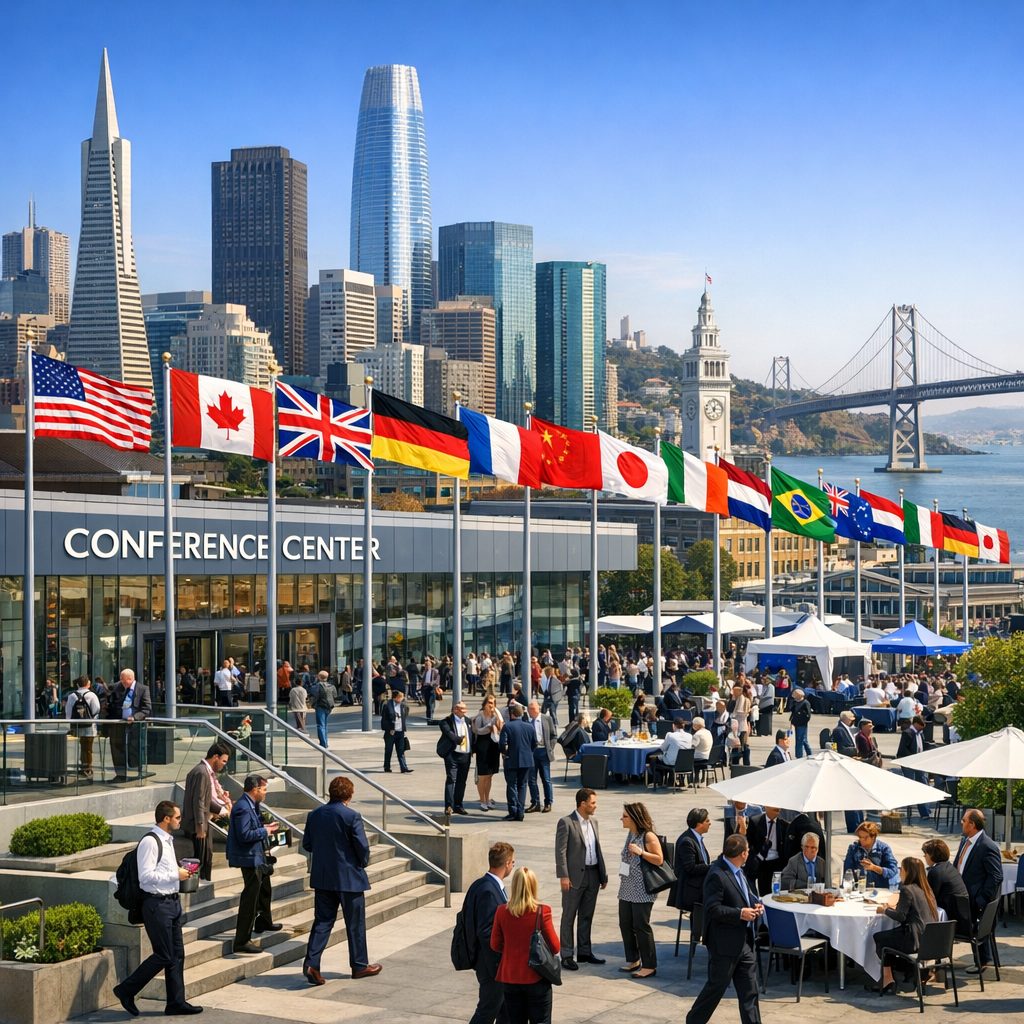
San Francisco has long been a beacon for international gatherings, leveraging its unique blend of culture, innovation, and infrastructure to attract events that place the city on the global stage. This role not only enhances San Francisco’s international profile but also brings tangible benefits to the local economy and community.
Economic Impact of Major Conferences
Hosting large-scale conferences significantly contributes to San Francisco’s economic vitality. For instance, in the first quarter of 2025, events at the Moscone Center generated an estimated $174 million in economic impact, drawing over 126,000 attendees. This marked a 12.2% increase compared to the same period the previous year, underscoring the city’s appeal as a premier conference destination.
Looking ahead, the return of the J.P. Morgan Healthcare Conference in 2026 is anticipated to further bolster the local economy. The 2025 edition of this conference attracted tens of thousands of visitors and contributed nearly $100 million in economic impact. Mayor Daniel Lurie emphasized the significance of such events, stating, “San Francisco is open for business. It’s really important that people hear that message.”
Global Sporting Events and Cultural Festivals
Beyond conferences, San Francisco’s capacity to host major sporting events showcases its global appeal. The city has been selected to host matches for the FIFA World Cup 2026, an event expected to draw approximately 500,000 visitors to the region. Such events not only boost tourism but also provide opportunities for local businesses and foster community pride.
Cultural festivals further enrich San Francisco’s international character. The annual Folsom Street Fair, for example, attracts between 250,000 to 400,000 attendees, celebrating the city’s diverse and inclusive spirit.
Infrastructure and Community Considerations
While these events bring numerous benefits, they also present challenges, particularly concerning infrastructure and community impact. The Asia-Pacific Economic Cooperation (APEC) conference, held in November 2025, required extensive planning to manage security and transportation logistics, affecting areas like the South of Market neighborhood. The San Francisco Municipal Transportation Agency (SFMTA) provided detailed information to help residents and visitors navigate the city during the conference.
Similarly, the city’s transportation systems face pressures during major events. In 2026, San Francisco is navigating a pivotal year in transportation, with regional transit systems encountering financial challenges coinciding with events like the Super Bowl and World Cup matches. Efforts are underway to ensure a seamless experience for visitors while addressing the needs of local commuters.
Looking Forward
San Francisco’s commitment to hosting international events reflects its dedication to cultural exchange, economic growth, and global engagement. As the city continues to attract such gatherings, it remains essential to balance the benefits with mindful planning to address infrastructure demands and community impact. By doing so, San Francisco can maintain its status as a welcoming and dynamic global city.